Direct use of AI-music workflows exposed repeated context switching between generators, documents and notes.
AI SaaS · Product Strategy · UX · FounderLive
Kordra
Turning a fragmented AI-music workflow into a structured place to plan, review, refine and hand off a song.
Context and problem
Start with the system as it really works.
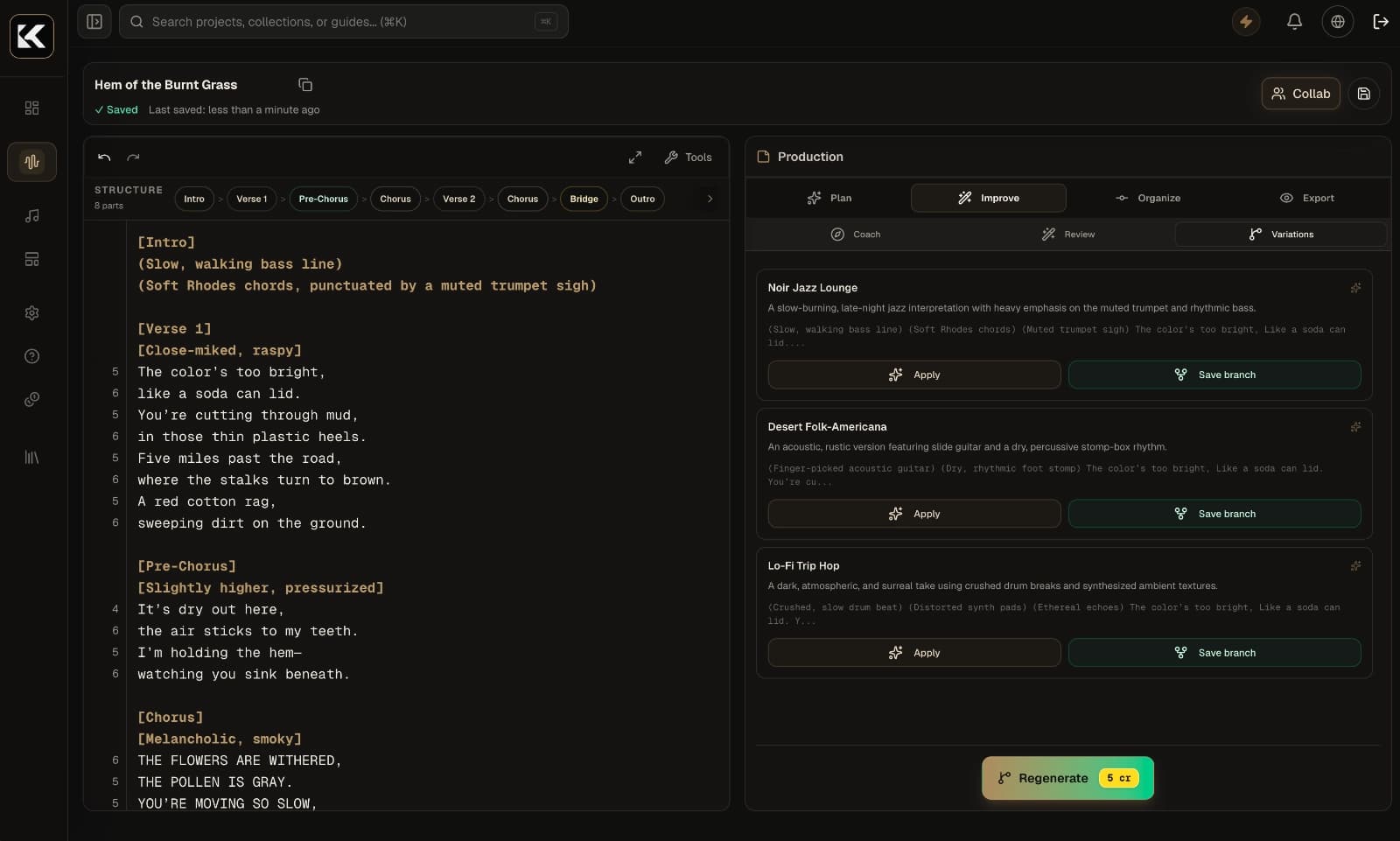
AI music generators can create an impressive first result quickly, but the work around that result often becomes fragmented across prompts, notes and disconnected versions.
Kordra began as Suno Architect, a focused way to prepare stronger inputs. The product changed as the wider workflow became clearer.
The problem
Creators needed continuity between an initial idea, the song structure, critique, alternative directions and the final handoff.
A generator-first product would duplicate existing tools while leaving the planning and decision-making gap unresolved.
Evidence ledger
What informed the direction.
The product’s evolution showed that structure, review and version continuity were more valuable than another generation surface.
Competitor and community observation informed the boundary between assisted workflow and creative control.
What needed to change.
A structured workspace around generation would help creators make more deliberate decisions without replacing the tools they already use.
Keeping song form, feedback and variations together would make exploration easier to reverse and handoff easier to understand.
What shaped the answer.
- Founder-led resources required a narrow product promise and careful prioritisation.
- Model cost, user trust and variable AI output made human oversight essential.
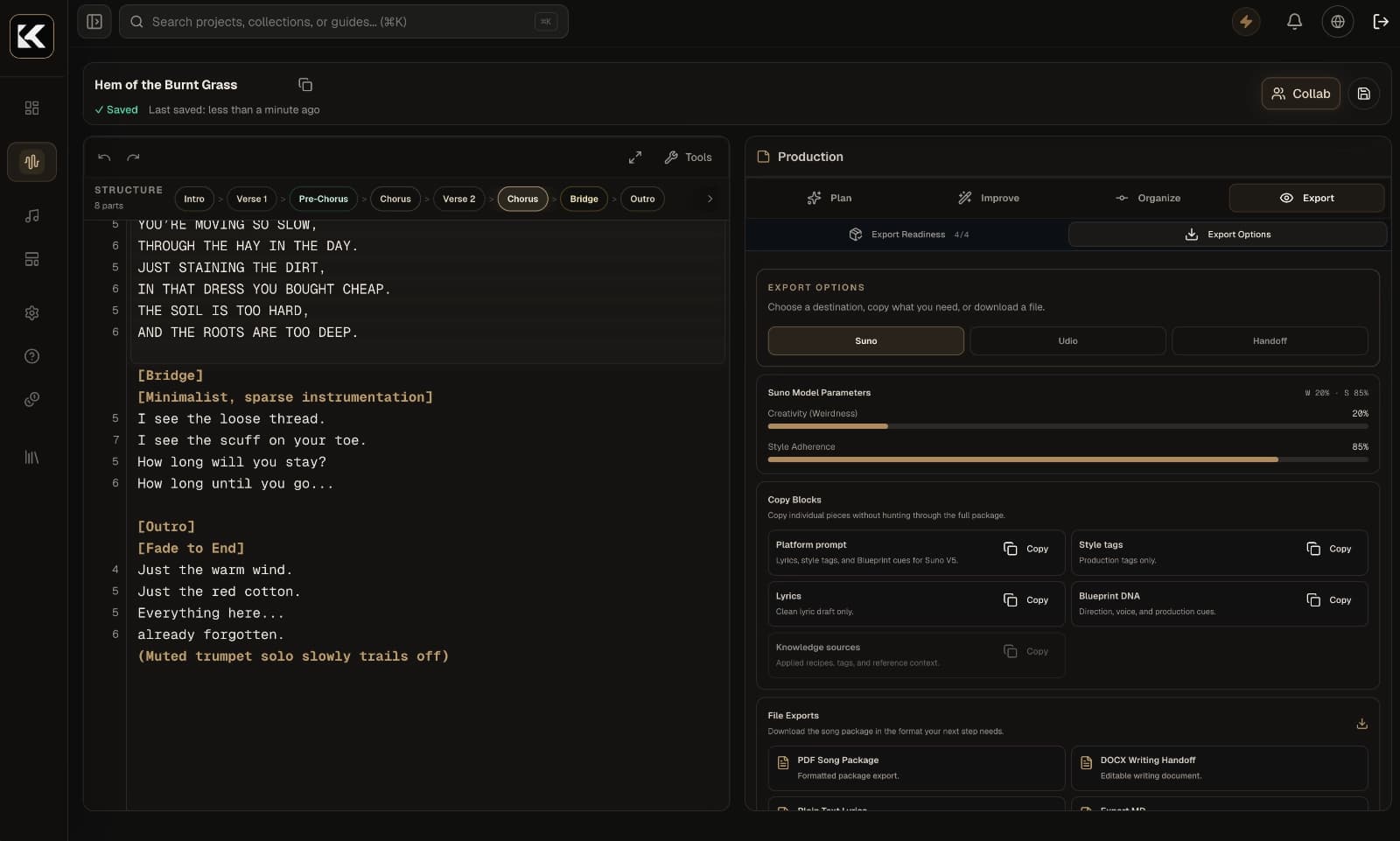
- Exports had to preserve portability rather than lock work inside Kordra.
Decisions and trade-offs
The choices that defined the product.
Product leadership becomes visible in what is chosen, rejected and kept deliberately simple.
Build a workspace, not another generator
Kordra concentrates on the work before and after generation, where continuity and judgement matter most.
Keep song form visible
Sections, production cues and lyrics remain close together so the draft reads like a song in progress.
Make feedback explain itself
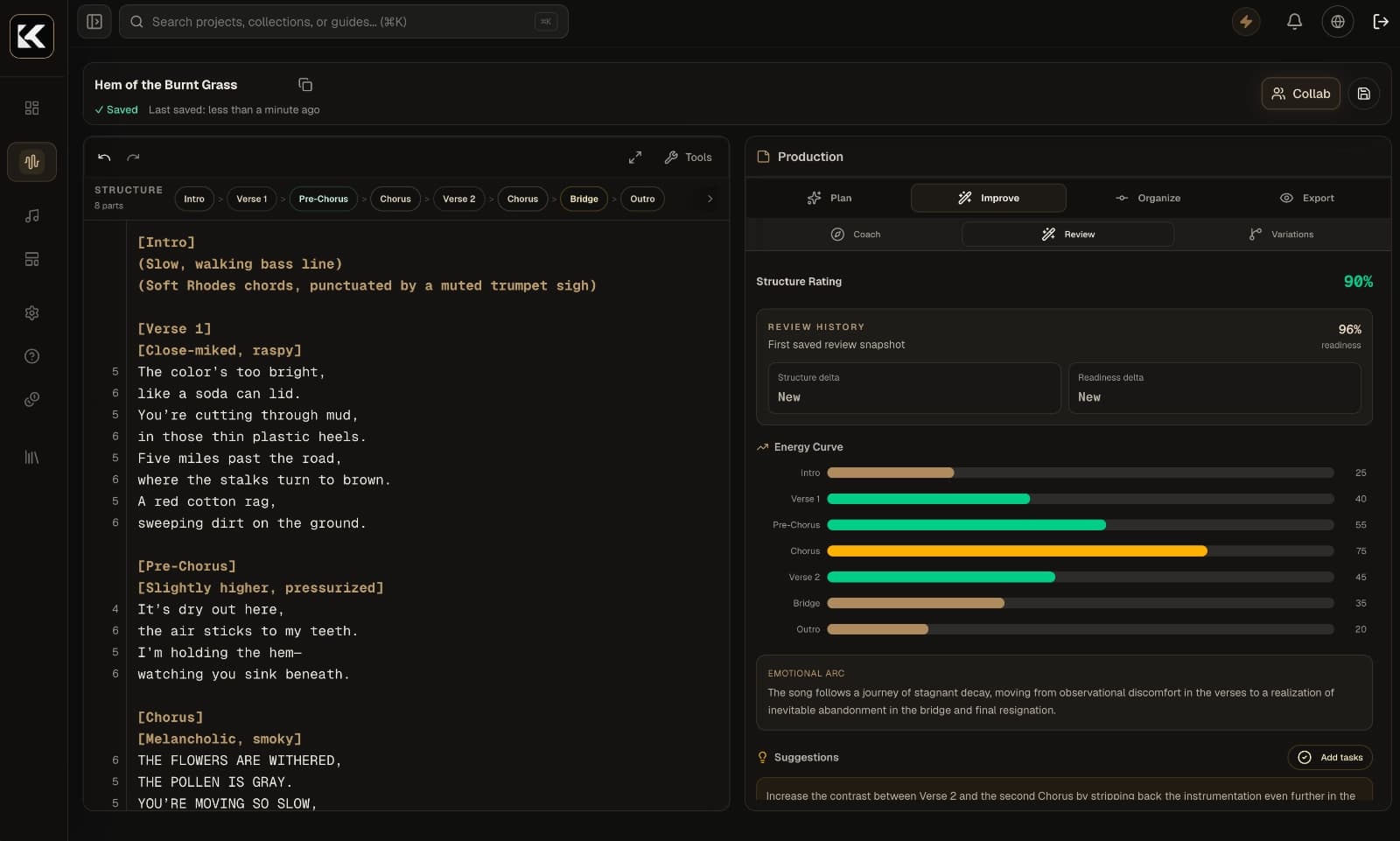
Review signals sit beside structure and energy evidence rather than presenting an unexplained score.
Protect the working draft
Variations can be explored and saved without forcing each experiment into the main version.
Execution
From direction to working system.
Structured writing and review
A section-aware editor, coaching and review tools create a coherent revision loop.
Portable handoff
Export options carry the useful song context into the next generator, document or studio step.
Verified outcomes
What the work produced.
Live product
Kordra is available at kordra.io and continues to evolve around the structured work between idea and handoff.
Clearer position
Repositioning Suno Architect as Kordra created room for a broader workflow product rather than a single-platform utility.
Reusable product foundation
The product now connects writing, critique, variations and export within one consistent system.
How the direction changed.
- The first proposition focused on producing better prompts for Suno.
- Practical use shifted the centre of gravity towards the song itself: its structure, revisions and handoff.
- The product and company identity were separated so Godsall.dev could explain Adam’s decisions while Kordra serves product customers.
What the work demonstrates.
- The strongest product opportunity was adjacent to generation, not inside it.
- A narrower first proposition helped expose the larger workflow problem.
- Future work should keep proving that each assisted feature improves control rather than adding novelty.