Community feedback distinguished AI-music creators from songwriters who wanted a deliberately non-generative environment.
Native macOS · Product Discovery · Creative WorkflowIn development
Kordra Studio
A native songwriting workspace shaped by a deliberate product decision: knowing when not to use AI.
Context and problem
Start with the system as it really works.
Kordra’s AI-assisted workflow did not represent every songwriter’s needs. Professional and traditional writers often wanted structure without generated lyrics or automated creative direction.
That difference was significant enough to shape a separate product rather than a settings toggle inside Kordra.
The problem
Songwriting work is often spread across documents, voice notes, lyric sheets, version names and messaging threads.
Adding generative AI to that workflow would weaken the proposition for writers who want software to organise their craft without influencing it.
Evidence ledger
What informed the direction.
Workflow research highlighted recurring needs around song organisation, takes, versions, credits and DAW handoff.
The native macOS direction reflected the need for a focused, low-friction workspace with local ownership.
What needed to change.
A separate native product could support traditional songwriting more honestly than an AI product with a disabled mode.
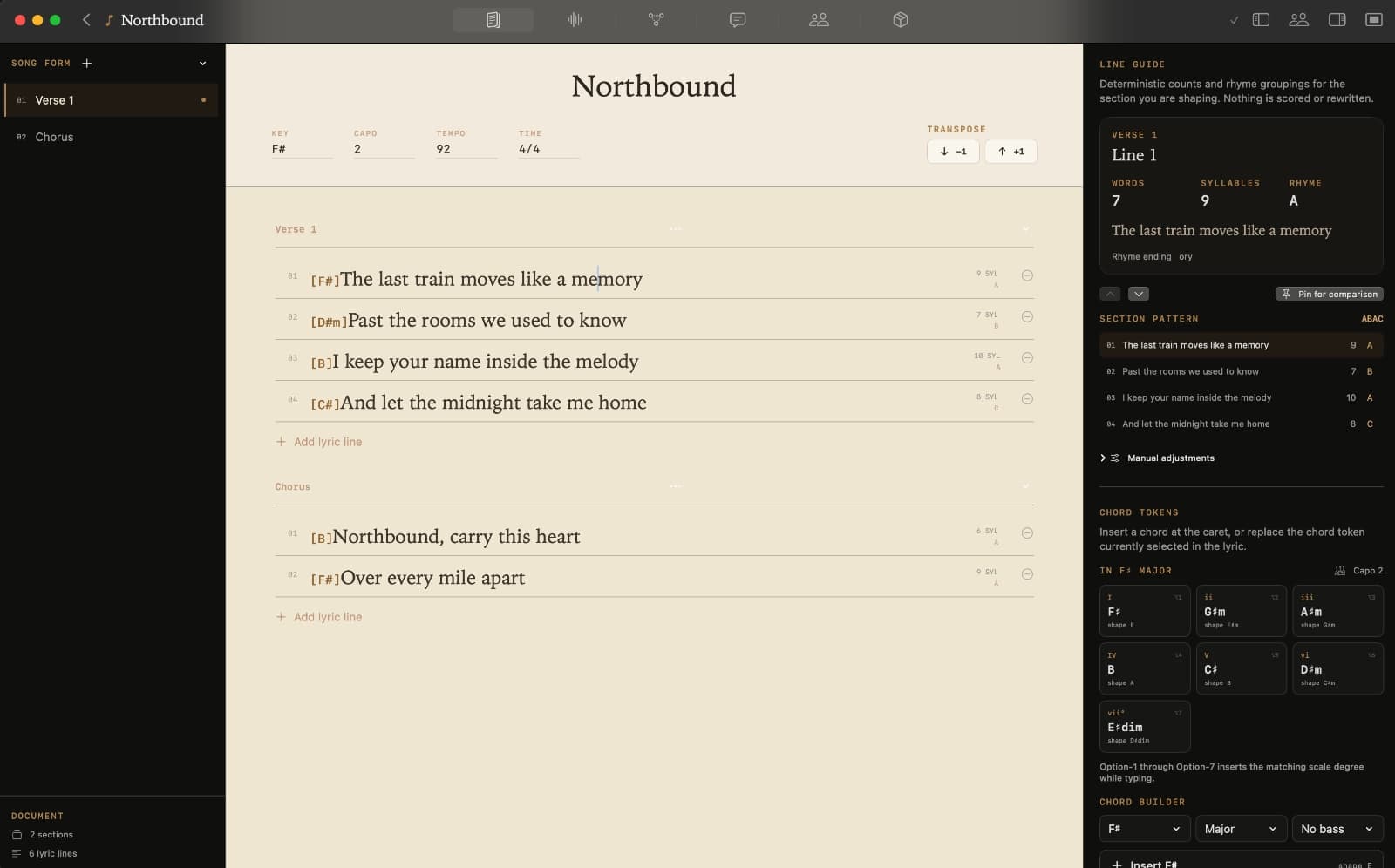
Local-first organisation and deterministic guidance could reduce administrative friction without changing the writer’s words.
What shaped the answer.
- The product must preserve creative ownership and avoid hidden generative behaviour.
- Native development requires a tighter feature set than a broad cross-platform launch.
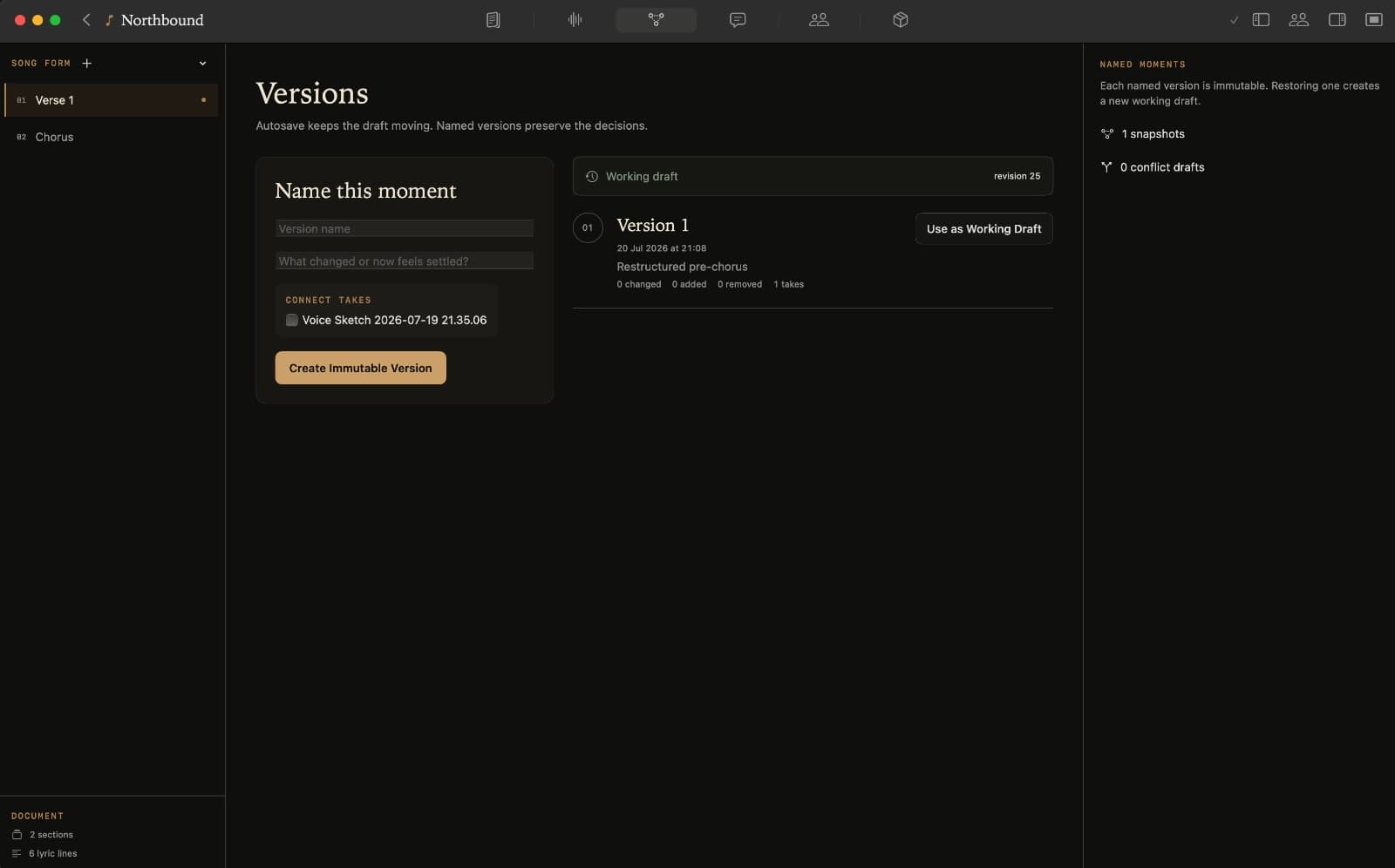
- Versioning, credits and exports must remain understandable outside the application.
Decisions and trade-offs
The choices that defined the product.
Product leadership becomes visible in what is chosen, rejected and kept deliberately simple.
Separate the product promise
Kordra Studio is not a non-AI mode inside Kordra; its audience, workflow and trust contract are different.
Use software to organise, not author
Guides can count, compare and structure, but they do not rewrite lyrics or make creative choices.
Choose native and local-first
A macOS application supports a focused writing room and keeps core project files under the writer’s control.
Design for handoff from the start
Credits, versions and export formats are part of the product architecture rather than release-day extras.
Execution
From direction to working system.
One organised writing room
Songs, sections, chords, tempo, notes and session material share a consistent project structure.
Versions that preserve intent
Untouched takes and explicit versions make experimentation reversible and easier to discuss.
Verified outcomes
What the work produced.
A distinct product direction
The discovery work produced a separate native proposition rather than stretching Kordra across incompatible audiences.
Clear trust boundary
The current design keeps generative AI outside the songwriting promise.
Working product structure
The in-development application covers project organisation, writing, versions, credits and export handoff.
How the direction changed.
- Early thinking treated a non-AI workflow as a possible extension of Kordra.
- Audience and trust differences led to a separate product, interface and native platform direction.
- The current work is tightening the path from first line to organised handoff before making release claims.
What the work demonstrates.
- Product judgement includes rejecting a fashionable capability when it weakens the user promise.
- Separating products can create more clarity than adding configuration to one broad platform.
- Availability and adoption claims should wait until the product is ready for them.