The problem
Songwriting projects were scattered across documents, voice notes, lyric sheets and version names.
A native Mac writing room for lyrics, chords, recordings and revisions. Designed and built around local files, offline use and the songwriter’s own creative decisions.
Available in the UK and US. A one-time purchase, with no subscription or account required.
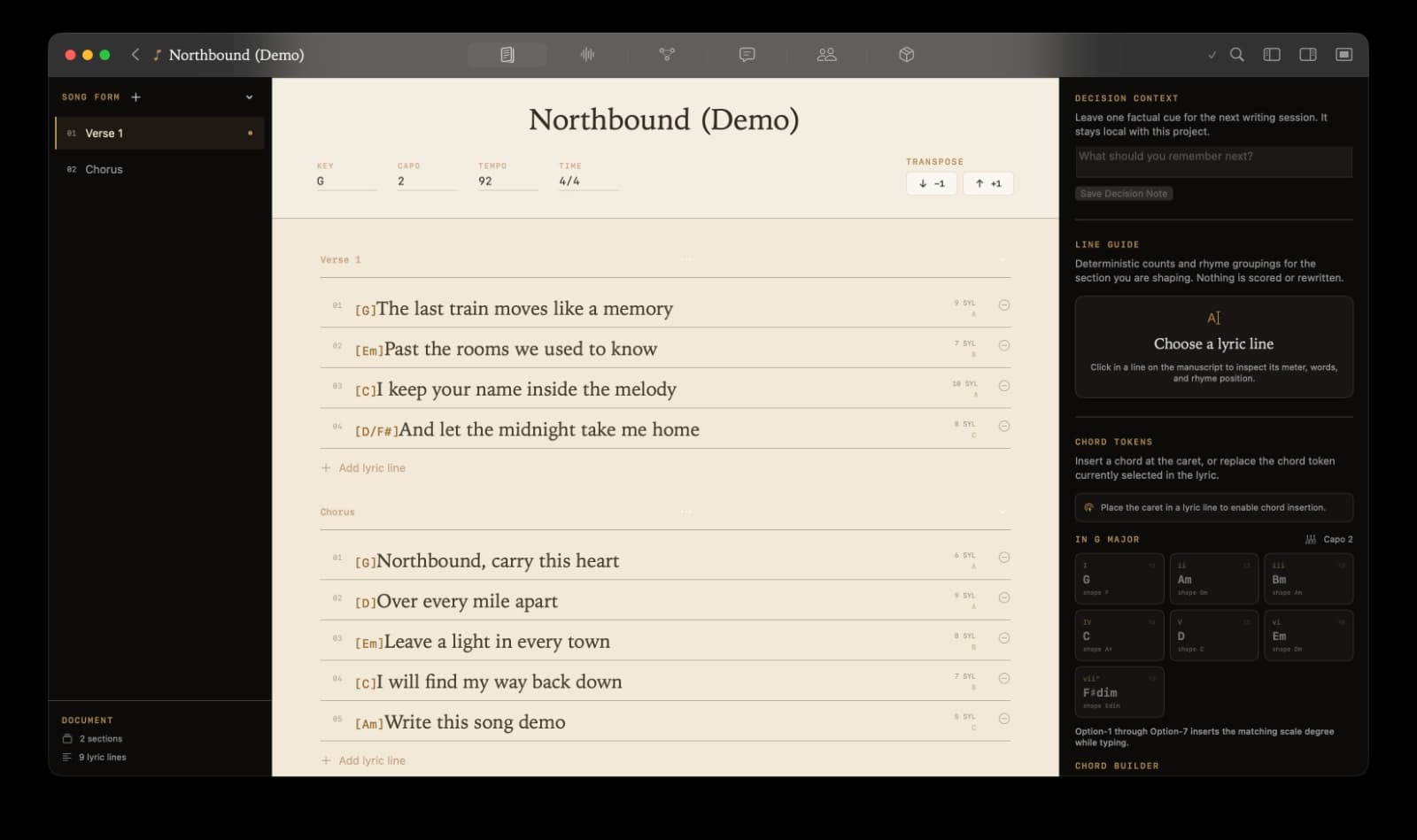
Songwriting projects were scattered across documents, voice notes, lyric sheets and version names.
Create a native, local-first writing room that organises the craft without authoring it.
A distinct macOS product model spanning songs, takes, versions, credits and portable exports.
Kordra Music’s AI-assisted workflow did not represent every songwriter’s needs. Professional and traditional writers often wanted structure without generated lyrics or automated creative direction.
Kordra Studio is not a non-AI mode inside Kordra Music; its audience, workflow and trust contract are different.
Guides can count, compare and structure, but they do not rewrite lyrics or make creative choices.
A macOS application supports a focused writing room and keeps core project files under the writer’s control.
Credits, versions and export formats are part of the product architecture rather than release-day extras.
Imported audio, voice sketches and time-based notes remain attached to the local project and its song sections.
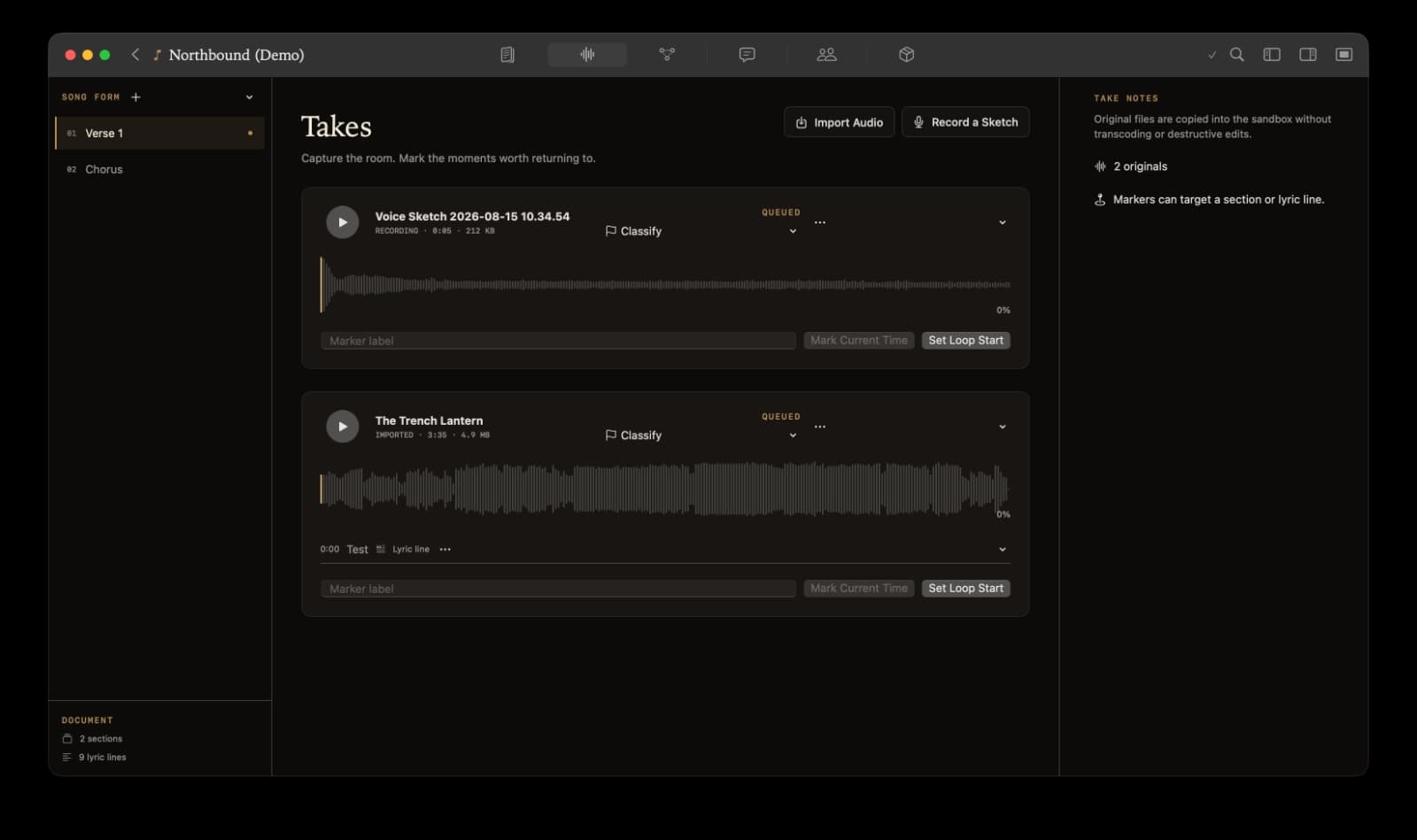
Untouched takes and explicit versions make experimentation reversible and easier to discuss.
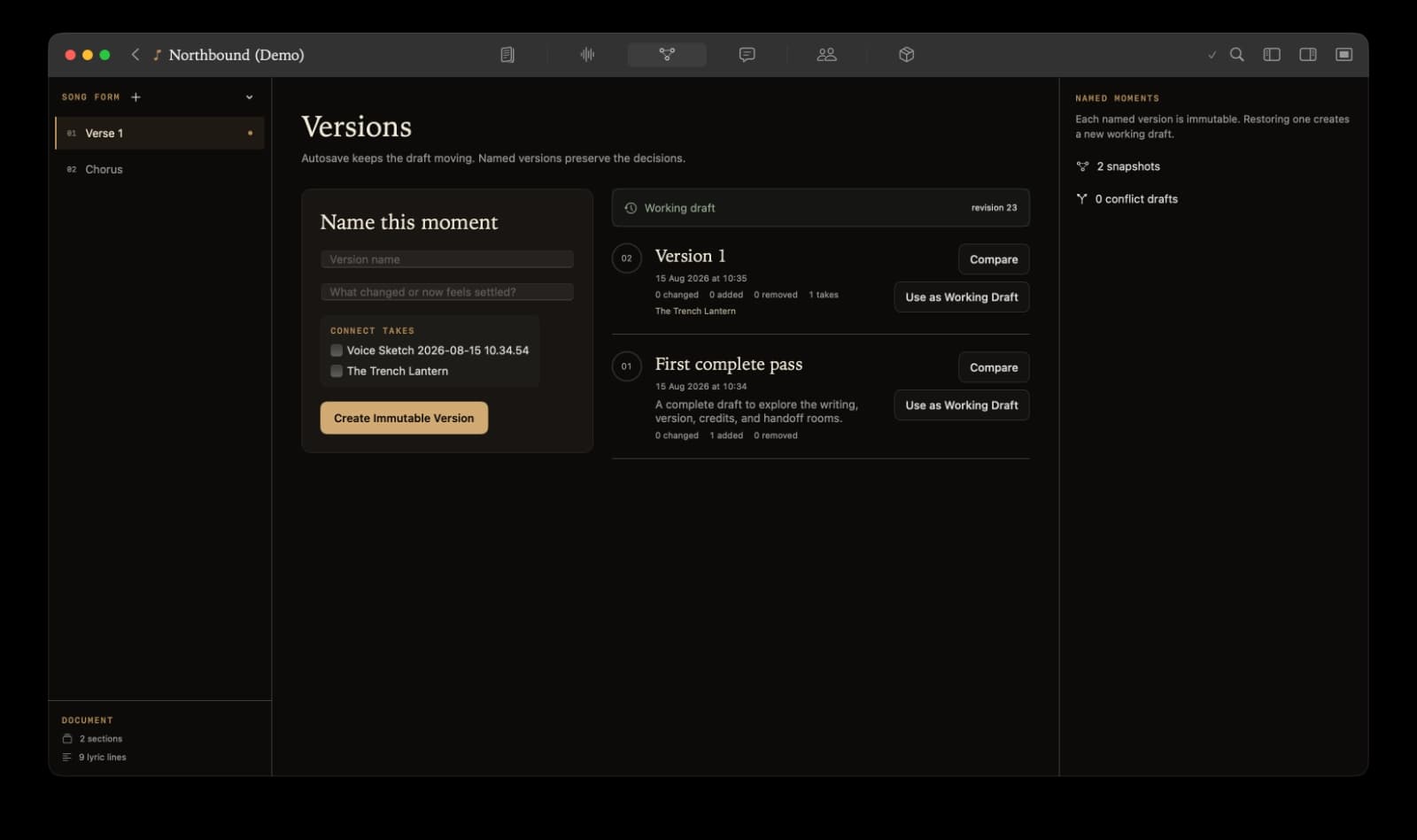
Contributors, composition splits and approval records are captured while the session context is still clear.
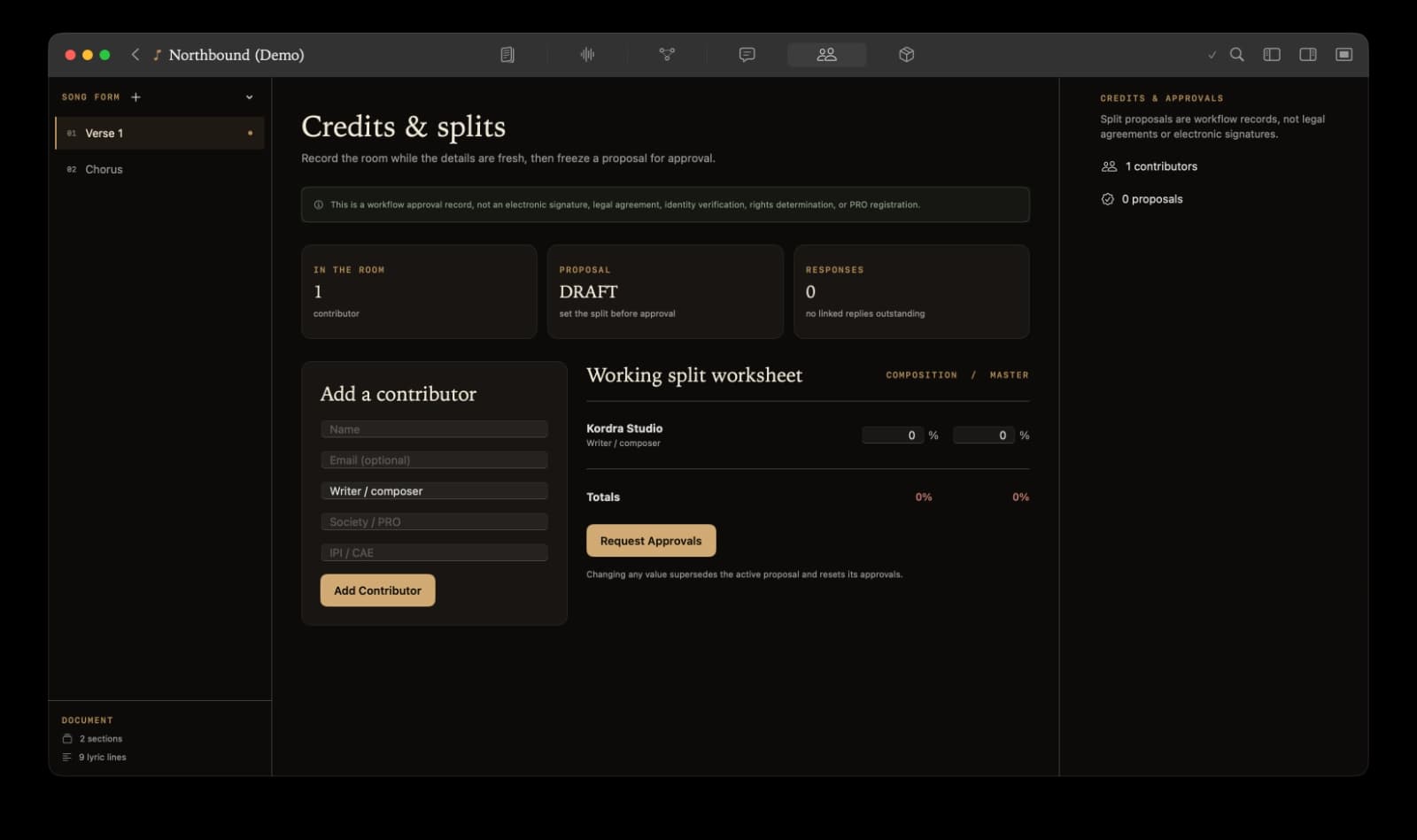
The local canonical record can move into writing, session and review formats with original takes preserved.
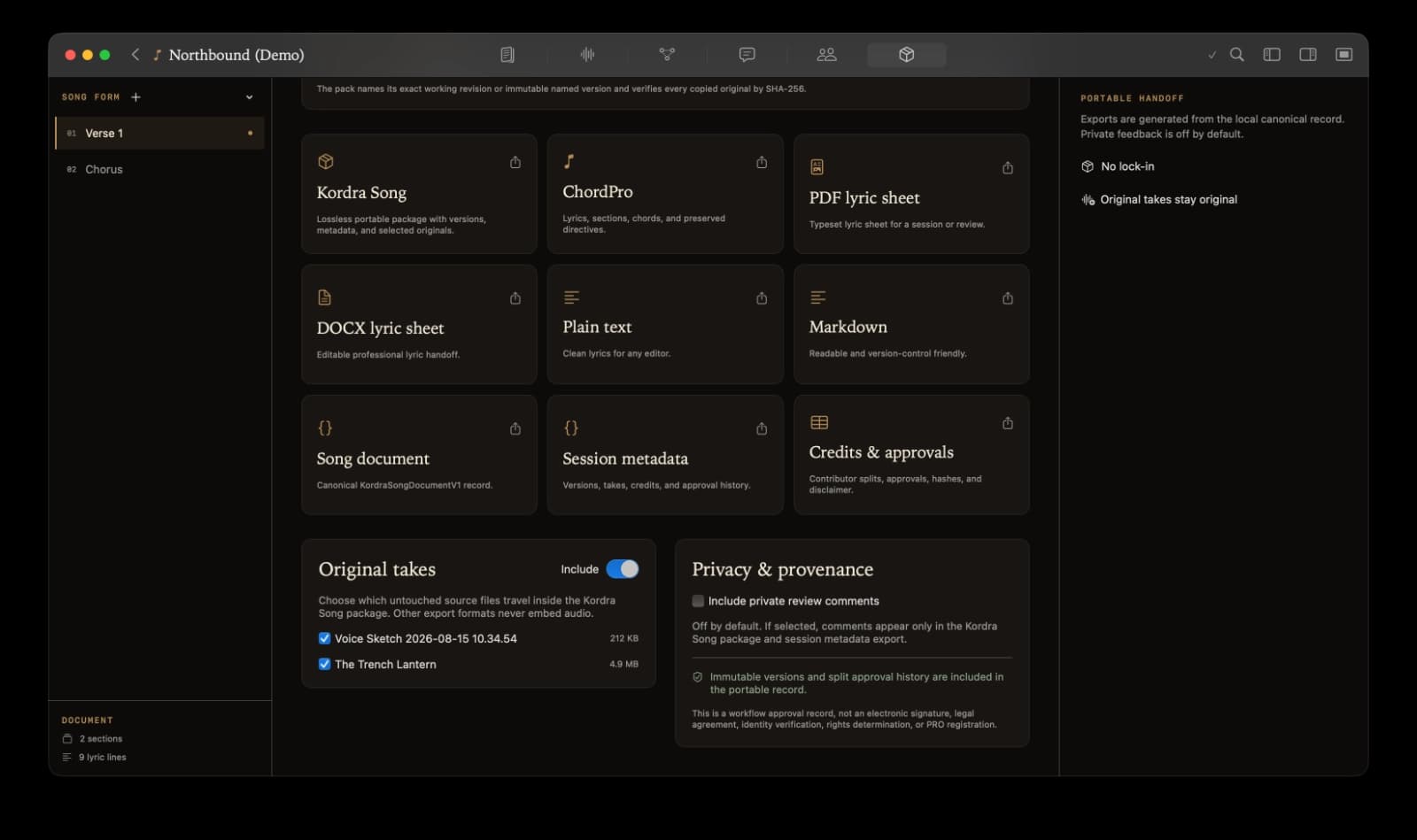
Defined Kordra Studio as a dedicated native macOS songwriting workspace, not a non-AI mode inside Kordra Music.
Scoped the product around organisation and deterministic guidance, excluding generated lyrics and automated creative direction.
Established the project, song, version, take, credit and export structure required for a native songwriting workspace.
Available on the UK and US Mac App Store under Adam Godsall, bringing the product from concept through native implementation and distribution.